2024
ICRA-CERCA Activity ReportMessage from the director
“We want to carry out research that not only stands out scientifically, but is also relevant and useful for society as a whole.”
The year 2024 has been one of profound change and new horizons for the Catalan Institute for Water Research (ICRA). In March, I had the honour of assuming the directorship of the centre, and shortly after, in April, the new deputy directors joined the team. With this new leadership team, we initiated an intense process of strategic reflection that has defined ICRA’s direction for the coming years.
One of the most significant milestones of 2024 has been the development and approval of the new Strategic Plan, which was finalised in June, followed by the co-development of the Action Plan throughout autumn 2024. This roadmap has a clear objective: to evolve towards an ICRA 2.0—a research centre that is more open, more engaged with society, and with a more tangible impact. We want to carry out research that not only stands out scientifically, but is also relevant and useful for society as a whole.
For this reason, we have launched cross-cutting strategic projects aimed at better connecting research with knowledge transfer, improving the centre’s communication and external visibility, and establishing new mechanisms for participation and governance. We have also begun working on new internal regulations to strengthen working conditions and professional relationships within ICRA, promoting a more inclusive, participatory, and respectful environment.
This path toward a new stage would not have been possible without the effort and involvement of all ICRA staff, to whom I would like to sincerely express my gratitude for their dedication and commitment. Together, we are shaping a stronger, more approachable ICRA, better prepared to face the major challenges posed by the future of water and sustainability.
Strategic plan 2024-2029
The Catalan Institute for Water Research (ICRA) is entering a new phase with the 2024–2029 Strategic Plan, approved in June 2024, which represents a profound transformation in its structure, functions, and objectives. This plan not only redefines the institution’s priorities, but also lays out a new roadmap to guide the centre’s research and activities toward greater scientific, social, and institutional impact. With the arrival of the new management team in the first half of 2024 — including the director in March and the deputy directors in April — the plan marks a turning point toward an ICRA 2.0: more open, more cross-cutting, and more committed to society.
A profound change in the management structure
One of the most visible changes in the new strategic plan is the reorganization of the management structure, an executive management reinforced by three deputy directorates:
The Deputy Directorate of Research has the mission to promote interdisciplinary collaboration within and outside ICRA, coordinate networks, and drive competitive research initiatives. It also oversees the organization of seminars, workshops, and excellence indicators, supported by the R+D+I office.
The Deputy Directorate of Impact guides research toward generating real social change. It promotes training researchers in impact storytelling, participation in transfer events, and continuous engagement with the Business and Social Committee, all aligned with the CERCA philosophy.
The Deputy Directorate of Governance aims to optimize internal operations, taking on responsibilities for coordinating laboratories and scientific-technical services, and supervising indicators aligned with the institutional strategy.
Strengthening research with an impact-driven vision
The new plan proposes a reorganization of the research lines, moving beyond the previous division into three disciplinary areas. Research is now structured into 18 lines grouped into five knowledge areas: environment, contamination, treatment, water and health, and governance. This new organization promotes a more cross-cutting vision oriented towards complex issues.
Two lines are especially strategic and receive priority in resources and staff stabilization: L17: Water Economy and Governance, and L18: Impact and Mitigation of Extreme Droughts. These areas reflect ICRA’s commitment to addressing emerging challenges with an interdisciplinary and public policy approach. Additionally, the creation of the Research Council is proposed, bringing together all the center’s principal investigators (PIs) as a space for strategic deliberation and active participation in scientific governance.
New momentum for transfer and communication
With the aim of strengthening the social and economic impact of research, the plan creates two new units: the Knowledge and Technology Transfer (KTT) Unit and the Outreach Unit.
The KTT Unit will channel all activities related to technology transfer, analytical services, collaborations with companies and administrations, and will promote a culture of research valorization. This unit is born as a response to shortcomings identified in external evaluations and the need to generate new income and impacts.
On the other hand, the Outreach Unit will structure communication and scientific dissemination activities, which until now have been sporadic and without a joint strategy. The goal is to improve ICRA’s public presence, generate valuable content, enhance citizen participation, and position the center as a reference in water science in Catalonia and Europe.
Improvement of governance and relationship with the ecosystem
The strategic plan also establishes new mechanisms for engagement with stakeholders. The creation of stable bilateral tables with the Catalan Water Agency (ACA) and the University of Girona (UdG) is planned to strengthen cooperation in projects, services, and joint actions. It also aims for more effective integration with the CERCA network, especially in communication and sectoral policies.
The Business and Social Committee, which has been largely inactive until now, is intended to be revitalized with regular activities such as roundtables, mixed workshops, and participatory forums. This will enable researchers to align their work with the real needs of society and the productive sector.
Stable funding and new paths to sustainability
Given the dependence on competitive funding, the plan foresees two key lines for economic stability:
1. Definition and implementation of a framework agreement with the Generalitat to enable long-term funding of strategic actions and the provision of services to administrations.
2. Creation of a sponsorship program, open to both companies and financial institutions, to attract resources through stable collaborations or both earmarked and non-earmarked donations.
Human team and working conditions as the foundation of change
One of the plan’s priorities is to improve staff conditions and professional development opportunities. To this end, a new bonus system will be implemented to recognize the achievement of objectives and the assumption of responsibilities. This system will be open to all research staff. A career development plan is also planned, including a tenure-track system for young researchers and internal promotions to positions of greater responsibility. Additionally, the goal is to increase the number of PIs to 20 over the next five years, prioritizing profiles with leadership capacity and the ability to secure competitive funding.
Finally, an annual evaluation of research activity is proposed, with specific indicators capturing the scientific, social, and institutional impact of the research. This plan represents a commitment to a new way of understanding research and management in the water sector. Its gradual implementation during the 2024-2029 period will position ICRA as a stronger, more open, collaborative, and socially valuable center for Catalonia and the broader research system.
ICRA in numbers
Key figures from 2024:
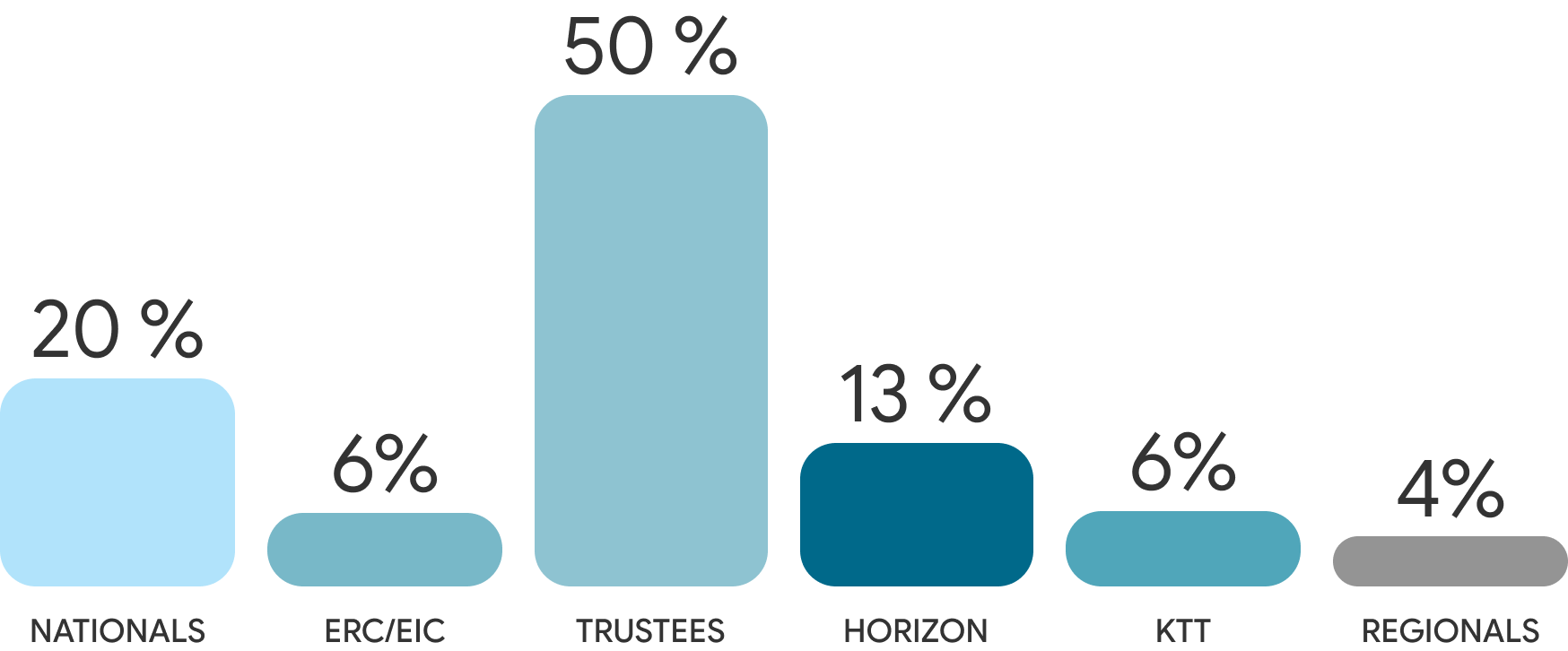
Percentage of financial contributions in 2024:
Key figures from 2024:
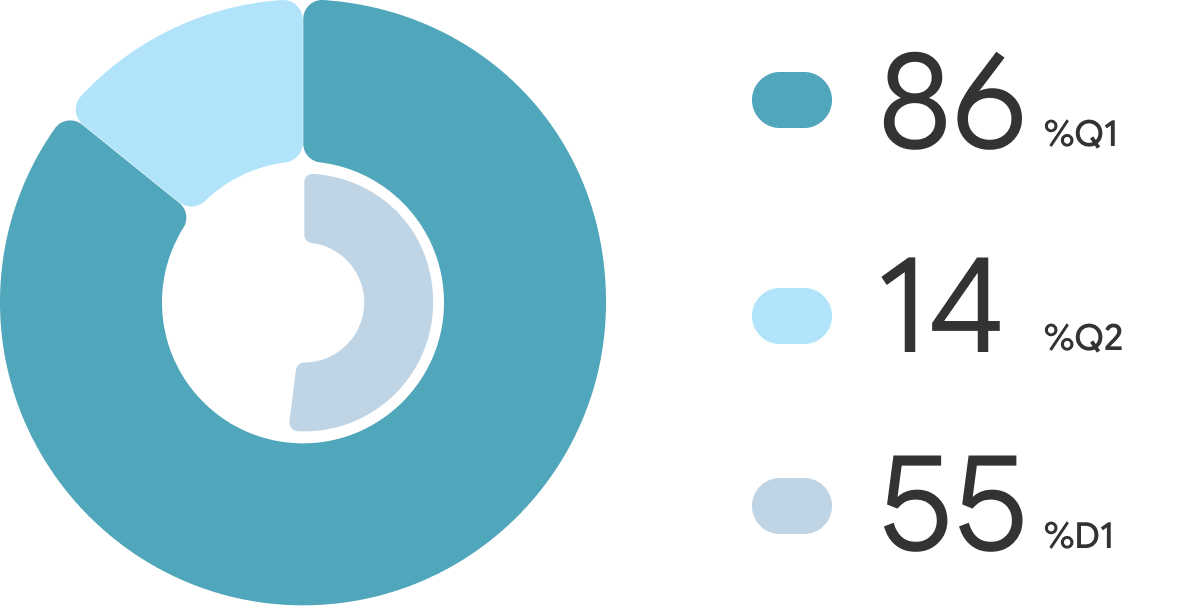
Percentage of Q1, Q2, Q3–4 in 2024 articles:
Number of articles in %Q1 and %Q1 in leadership between 2021 and 2024:
Total publications from 2021 to 2024:
Key figures from 2024:
Number of citations in legislation between 2021 and 2024:
Key figures from 2024:
% economic contribution from ktt compared to competitive projects:
Key figures from 2024:
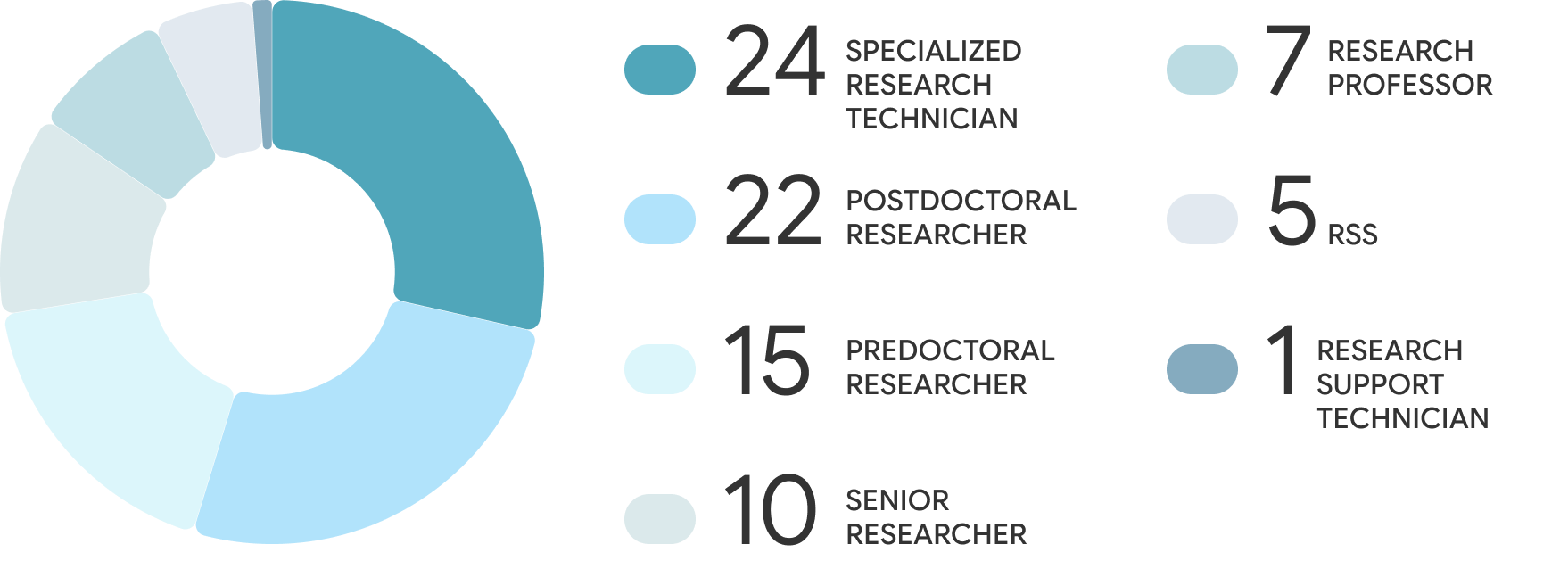
Research staff 2024:
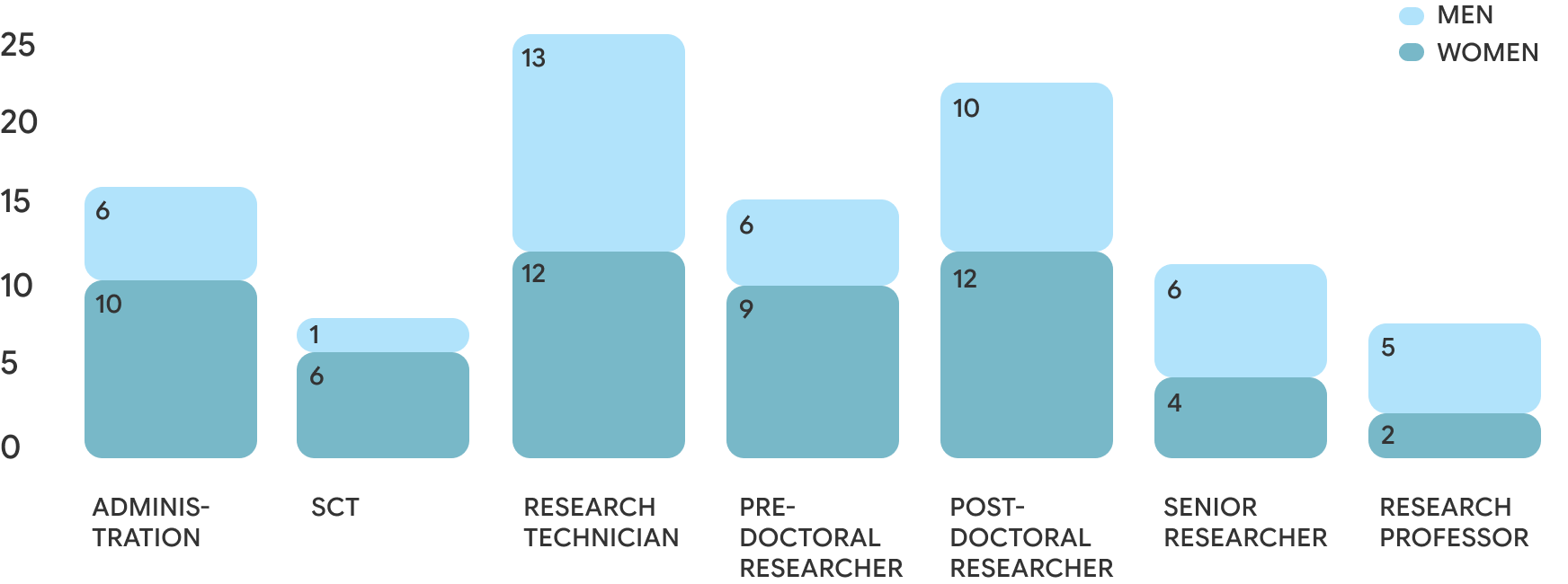
% Gender distribution by professional category 2024:
ICRA staff map 2024:
Europa: Austria: 2, Germany: 1, Belgium: 1, Croatia: 1, Spain: 81, Estonia: 1, Finland: 1, France: 2, Greece: 1, Italy: 3, Portugal: 1, Romania: 1, Russia: 1, Serbia: 2.
Asia: India: 2, Iran: 1, China: 4
Africa: Morocco: 1
America: Argentina: 3, Bolivia: 1,
Colombia: 4, Ecuador: 1, Mexico: 1, Peru: 1.
Key figures from 2024:
Highlights from 2024
“Climate change is already here and it's here to stay; what we're experiencing is just the appetizer.”
ICRA-CERCA researcher Jelena Radjenovic receives the European ERC Consolidator Grant.
Clearing undergrowth in forests improves the flow of rivers and aquifers.
Humanity has altered the cycle of life in the planet’s rivers.
Poisoned by microplastics: ICRA scientists assess their impact and how to address it.
ICRA-CERCA leads a pioneering project to tackle water scarcity in Spain.
Research stay of ICRA researcher Josephine Vosse at the KU Leuven Plant Institute.
Contribution to the Water Parliaments: Catalonia Pavilion at the 2025 Venice Architecture Biennale.
RIVSTRESS Project: Effects of multiple stressors on river biodiversity and functions.
Researcher Esther Mendoza (ICRA-CERCA) visits the Salvador Sunyer i Aimeric Institute in Salt.
ICRA-CERCA promotes water reuse research at the REUSE EUROMED 2024 conference.
Eight ICRA-CERCA researchers ranked among the world’s top 2 % according to Stanford University’s 2024 ranking.
Maria Pau Garcia-Moll wins the Best Communication Poster Award for Young Researchers at EMEC24.
Researcher Carles Borrego analyzes antibiotic resistance in the environment at the 1st One Health Workshop.
Launch of the AquaLoops4Med project.
The Catalan Institute ICRA-CERCA joins the Association of Municipalities and Entities for Public Water (AMAP).
ICRA-CERCA takes center stage at Girona's 2024 Nature Week.
ICRA-CERCA stands out at the 34th SETAC Europe Annual Meeting.
About ICRA
The Government of Catalonia created the Catalan Institute for Water Research (ICRA) on October 26, 2006, within the framework of the Research Centres of Catalonia (CERCA) Programme. The Government participates in ICRA through the Department of Business and Knowledge. The CERCA centres, including ICRA, are part of the Research and Innovation Plan of Catalonia, approved by the Government of the Generalitat de Catalunya.
Mission
ICRA’s mission is to attract scientific talent and the financial resources needed to maintain a centre of excellence in the field of water. The institute generates essential knowledge on hydrological processes, aquatic ecosystems (including human and ecological health), and chemical and microbial contaminants—particularly under conditions of water scarcity and extreme environmental events such as droughts and floods. ICRA focuses on developing appropriate technologies for the treatment, improvement, and reuse of water. It conducts fundamental research with an interdisciplinary approach and transfers this knowledge to public administration, industry, scientists, decision-makers, and society at large.
Vision
ICRA’s vision is to remain a centre of excellence in the field of water and to respond efficiently and competitively to the challenges and issues associated with the water cycle in general; and more specifically, to the state of ecosystems, water resources, the impacts of new products, new treatment technologies, and the sustainable use of resources within the Mediterranean climate (though not exclusively).
Strategic priorities
Leader in water research in Catalonia and Southern Europe:
ICRA as a benchmark in integrated water management at both regional and international levels.
Innovation and transfer of knowledge and technologies:
Bring innovative solutions generated through research to society.
Research with impact:
Conduct research that addresses global challenges and contributes to the development of legislation.
Excellence in research:
Carry out high-quality, innovative research with international reach.
Scientific and Technical Platforms
ICRA Green Wall
ICRA’s experimental green wall installation represents an innovative technology for the treatment of urban wastewater, especially greywater (from kitchens and sinks), aimed at promoting safe decentralised or in situ reuse schemes for irrigating crops for human consumption and other uses.
The design replicates natural processes (adsorption, precipitation, plant absorption and biodegradation) that occur in vertical and horizontal flows of constructed wetlands, within a modular green wall structure. The main innovation, compared to existing commercial green walls, is its modularity and flexibility.
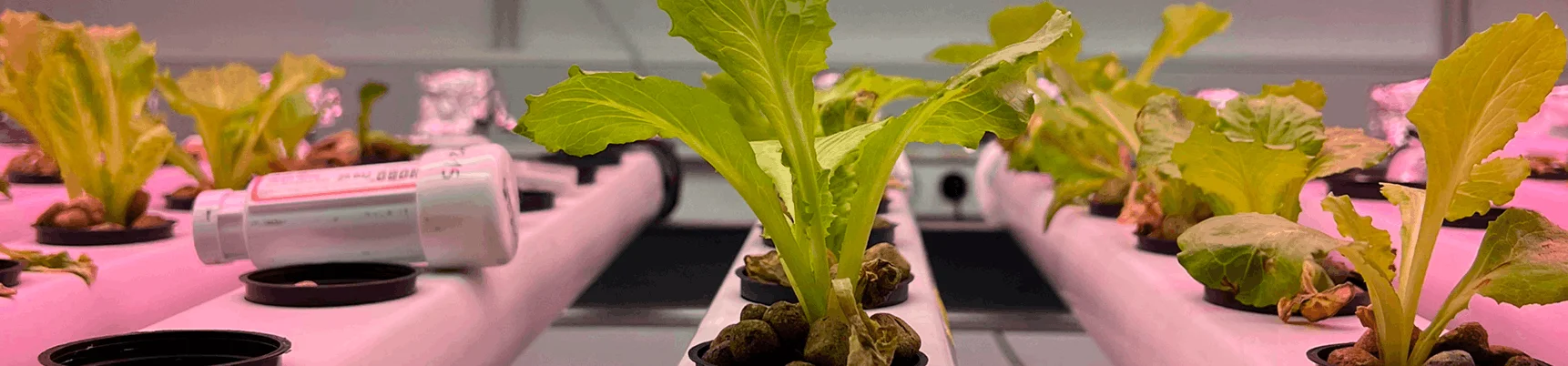
Unique Research Infrastructures (URI): Hydroponics Pilot
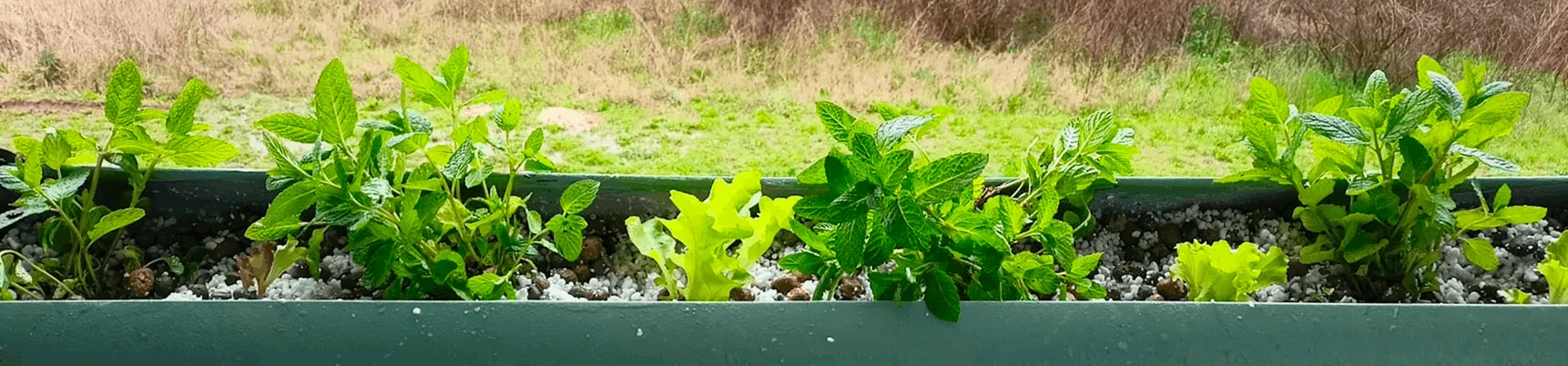
ICRA is researching the use of hydroponic systems for the treatment and reuse of greywater and wastewater in several European projects. In 2024, a pilot plant was operated in the centre’s laboratories, growing edible plants (lettuce, mint) and phytoremediation plants (such as sedge) under controlled conditions.
Different types of greywater were tested, including water from hotel showers, laundries, and kitchens. The study focuses both on the treatment efficiency and the accumulation of contaminants in the plants, as well as the potential risk to human health.
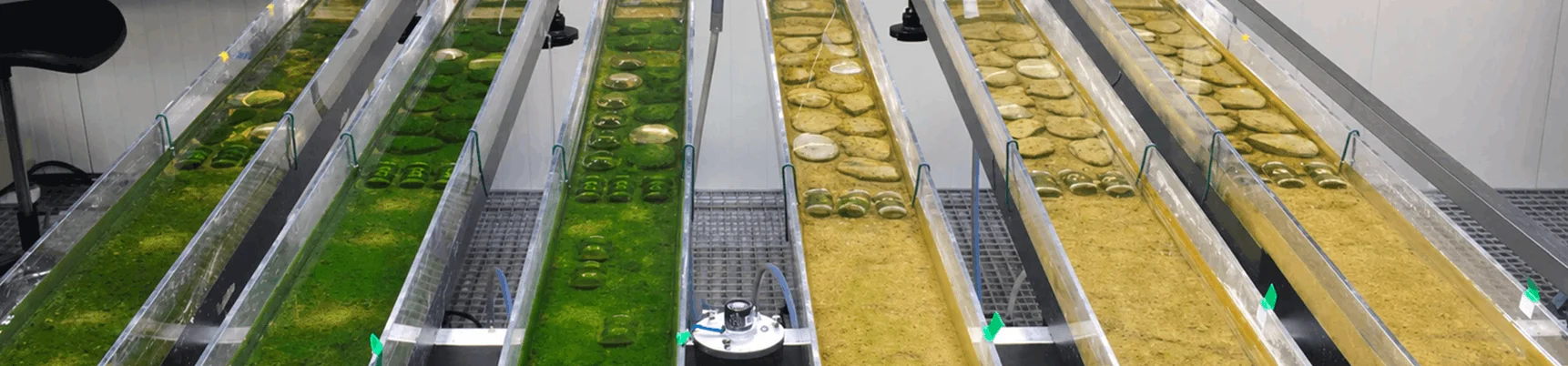
Experimental Stream Facility
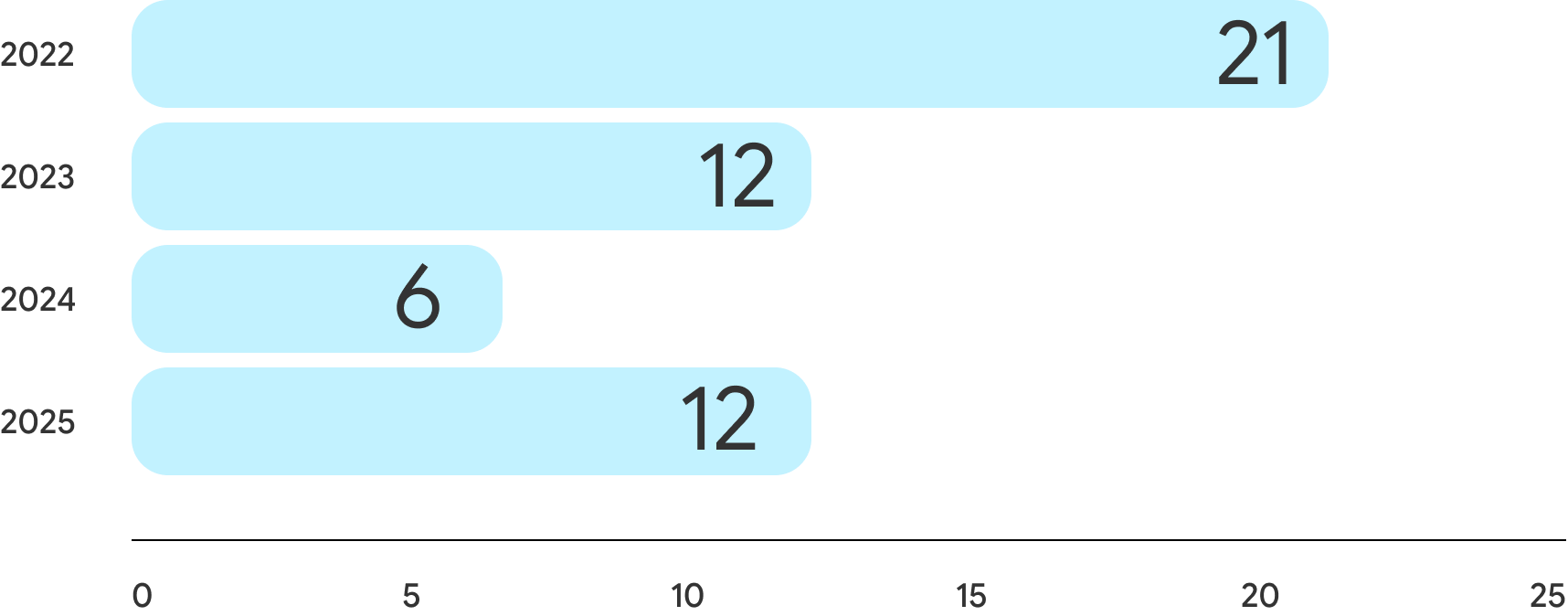
The Experimental Stream Facility (ESF) is a unique platform for research on freshwater aquatic ecosystems, allowing the simulation of environmental conditions and the study of the impact of various factors such as temperature, light, or pollution. Since 2012, it has generated more than 28 scientific publications.
In autumn 2024, an experiment was carried out within the framework of the Retos20_RIVSTRESS project to analyse the ecological legacy effects in stream biofilms, studying their resistance and recovery capacity in response to disturbances such as drought or pollution.
Research lines
According to ICRA’s new Strategic Plan, a new research structure has been adopted to improve resource management efficiency and promote more cross-cutting research. This reorganisation replaces the previous model based on three disciplinary areas with a system of research lines grouped into five major areas: environment, contamination, treatment, water and health, and governance.
The goal is to avoid fragmentation and strengthen the interconnection between lines, especially in areas such as governance and health. Some lines have been maintained, while others have been redefined to support their development through 2029.