Catalan Institute for Water Research
Research and Innovation for the sustainable use of water
Research and Innovation for the sustainable use of water

From May 25th to 29th, 2026, the Catalan Institute for Water Research (ICRA) organized the second edition of the Frontier School. This international training program is aimed at PhD students, postdoctoral researchers, and young professionals interested in the challenges of water resilience within a context of global change. For five days, Girona became a hub for interdisciplinary learning, knowledge exchange, and the creation of new collaborative networks among researchers from diverse fields.
Under the title Water Resilience & Global Change, this edition addressed some of the main challenges facing water systems and aquatic ecosystems in the face of climate change, pollution, and increasing pressures on natural resources. The program was structured into four thematic modules combining theoretical sessions, interactive debates, and field activities.
The week opened with a module dedicated to nature-based solutions for climate change adaptation. Participants learned about innovative applications for urban water treatment, water resource reuse, and sustainable drainage, exploring examples such as treatment wetlands and green walls for greywater reuse. The sessions also highlighted the potential of these solutions to enhance biodiversity, provide ecosystem services, and increase resilience against emerging contaminants and the impacts of climate change.
The second day focused on issues such as climate warming, water scarcity, and pollution, as well as the ecological responses of aquatic organisms to these stressors. Strategies for monitoring and adaptive management to preserve biodiversity and ecosystem functions were also presented.
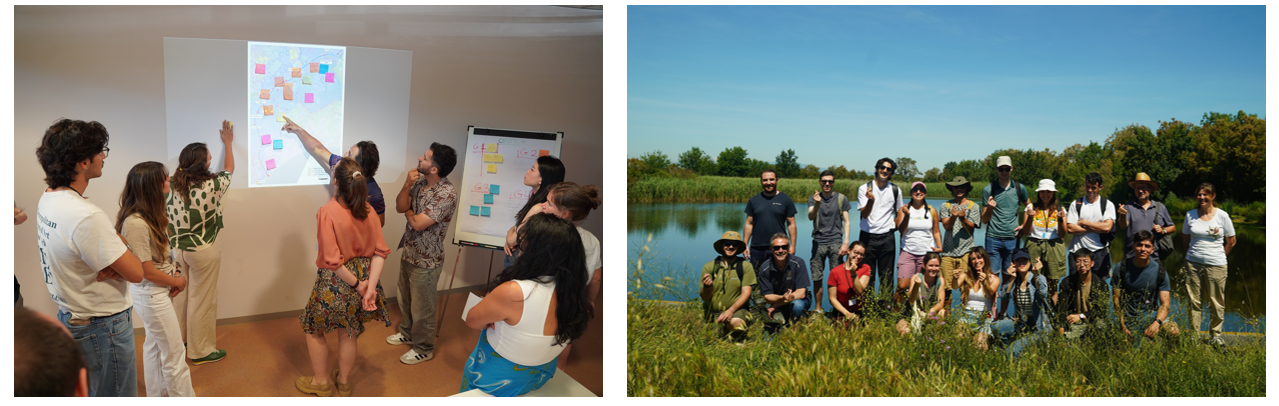
One of the highlights of the week was the field trip to the Empuriabrava wastewater treatment plant and the Aiguamolls de l’Empordà wetlands. This visit provided an on-site look at how nature-based solutions help improve water quality before it reaches protected wetlands, reducing nutrient input and promoting biodiversity conservation. Participants also gained first-hand insight into the environmental challenges these ecosystems face, ranging from human pressure to impacts driven by sea-level rise.
The fourth day was dedicated to the use of integrated modeling and decision support tools to strengthen the resilience of water systems against climatic and social pressures. Participants explored various methodologies to integrate data, scientific knowledge, and management criteria into real-world decision-making contexts, aiming to promote more sustainable and adaptive strategies.
The Frontier School concluded with a module focused on science communication and maximizing research impact. Through practical sessions, participants learned strategies to communicate their findings effectively to different audiences, including policymakers, industry professionals, the media, and the general public.
This second edition reinforces ICRA’s commitment to innovative, interdisciplinary training connected to the major environmental challenges of the present and the future.