Catalan Institute for Water Research
Research and Innovation for the sustainable use of water

Research and Innovation for the sustainable use of water

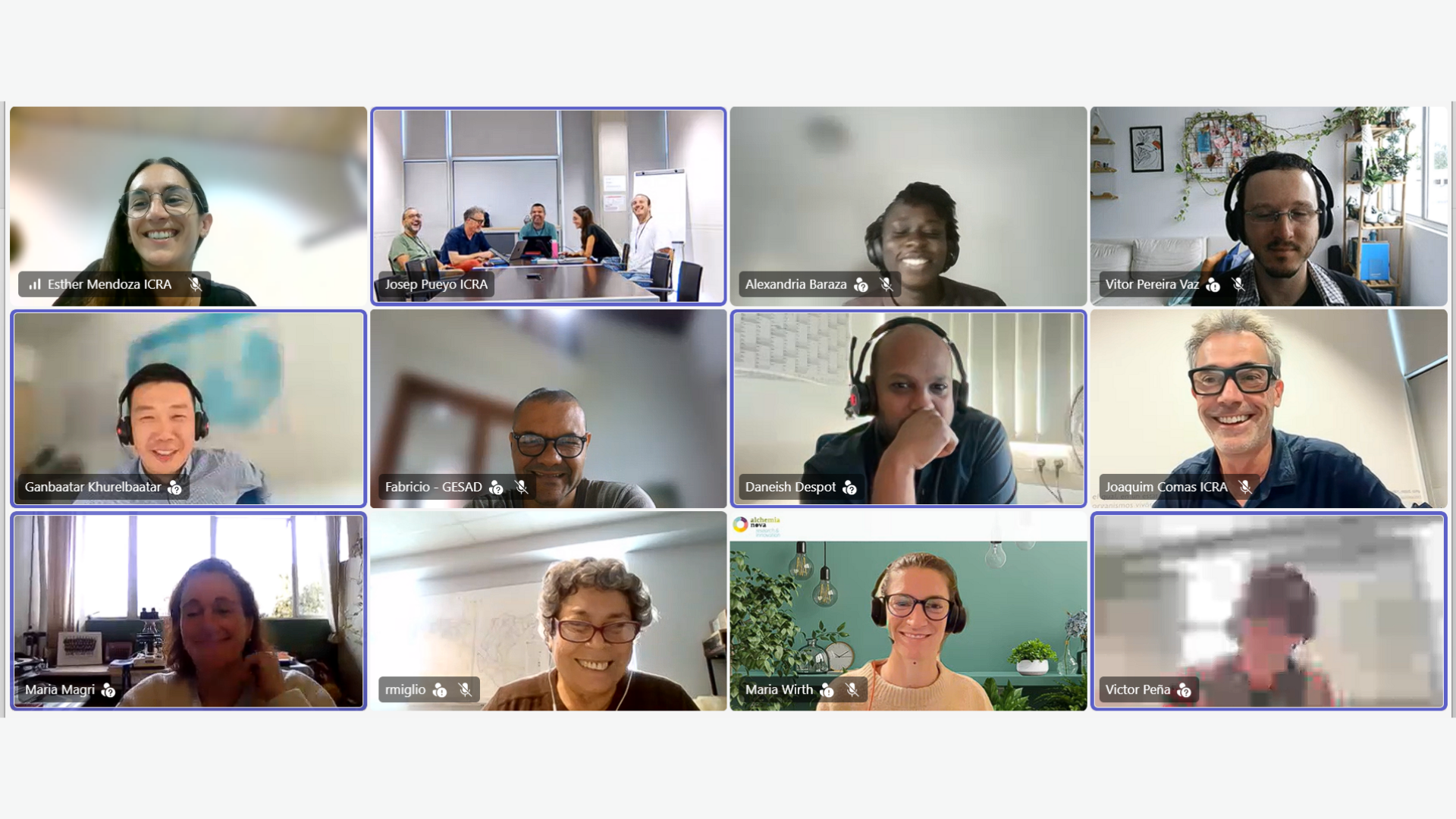
On October 7 and 8, the PhageLand project (Phage treatment and wetland technology as intervention strategy to prevent dissemination of antibiotic resistance in surface waters) final meeting took place at ICRA. PhageLand was funded in the JPIAMR 2021 call and it has been coordinated by ICRA. This project involves research groups from the University of Warsaw and the University of Life Sciences in Warsaw (Poland), the Catholic University of Leuven (Belgium), the Quadram Institute of Biosciences (United Kingdom), the Technical University of Delft (Netherlands) and the Nicolae Testemitanu State University of Medicine and Pharmacy (Republic of Moldova).
The objective of PhageLand has been to develop a new wastewater treatment technology combining the self-purification capacity of constructed wetlands with a bacteriophage-based treatment to prevent the transmission of antibiotic resistance from wastewater to surface waters. The results of the project have made it possible to demonstrate that the two model constructed wetlands studied (Empuriabrava in Girona and Orhei in Moldova) are very efficient in the removal of pharmaceutical compounds and antibiotic resistance genes from wastewater.
In addition, we tailored a cocktail of 6 bacteriophages infecting antibiotic-resistant ESKAPEE pathogens from the collection of 120 phages previously isolated from wastewater. The cocktail was applied to raw wastewater feeding a pilot plant, which was used as a proof-of-concept to demonstrate the effectiveness of this nature-based combined technology. Although the results do not yet allow its immediate application, they offer an innovative strategy for the combined use of bacteriophages and constructed wetlands for wastewater treatment. This strategy can be useful in areas or countries where the installation of wastewater treatment plants becomes unfeasible due to logistical or economic problems.

Project PCI2021-122109-2A (PhageLand) funded by MCIN/AEI/10.13039/501100011033 and the European Union NextGenerationEU/ PRTR